An editorial architecture
The grid and page types define the place of text, imagery and navigation cues. A flatplan organises up to 24 pages including the cover, allowing us to review content volume and the sequence of sections.
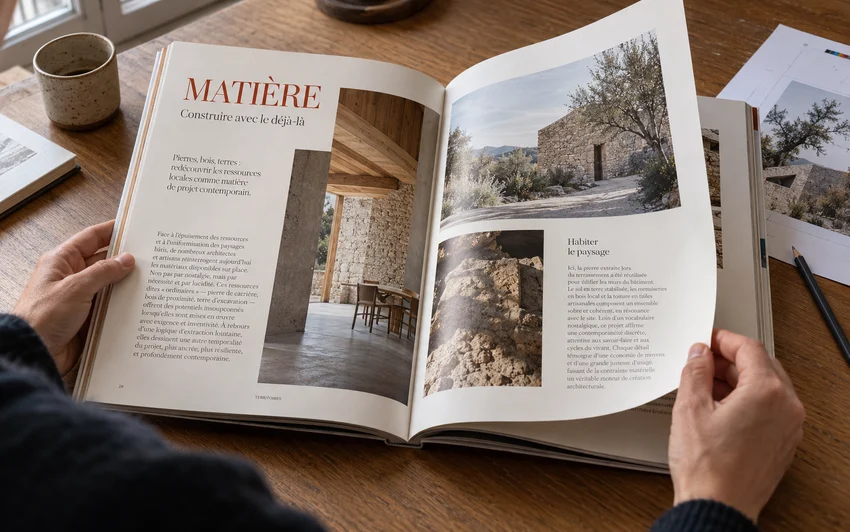
Give content room to breathe.
A beautiful document should guide the reader. We stage ideas, establish a clear hierarchy and build a rhythm across pages. Report, portfolio, booklet or independent publication: content becomes a coherent object that is a pleasure to read.
Report, portfolio or independent publication: a document is not a sequence of pages to fill. We consider how readers enter the subject, find information and move between levels of detail. The grid, typography, imagery and pauses are chosen for the content and the conditions in which it will be read.
The flatplan helps anticipate rhythm across the whole publication before finalising every spread. We check consistency in headings, captions, folios and secondary information. Final preparation distinguishes screen reading from the printer’s requirements, using their specifications and approved content.
One publication of up to 24 pages including the cover, in one format and one language.
The grid and page types define the place of text, imagery and navigation cues. A flatplan organises up to 24 pages including the cover, allowing us to review content volume and the sequence of sections.
Approved text and images are laid out in the selected direction. We refine relationships between pages, heading hierarchy, captions and spacing to sustain a coherent reading experience in the agreed format and language.
You receive a screen PDF and a PDF prepared for the printer to their technical requirements. Production settings, any agreed editable files and the checks expected from each participant are specified in the quotation.
An example structure for a 24-page publication. The actual allocation depends on your content.
Cover: establish the subject and the publication’s identity.
Opening and context: orient the reader and introduce key references.
Development: distribute sections, images and levels of detail.
Closing pages: bring the story to a close and organise final information.
We review final content, imagery and format specifications. Editorial structure is discussed before layout so that missing material or excessive volume is not discovered too late.
The flatplan and first page types establish the rhythm. Once the direction is approved, we compose the document and harmonise the different information groups.
Consolidated feedback refines the selected version. Exports are then prepared for the agreed uses; physical production remains the responsibility of the selected printer.
Limited corrections are normal, but substantial rewriting may affect pagination and the rhythm of the entire publication. We assess the impact before proceeding; starting with approved content avoids repeating several stages.
No. This offer covers design and files. We can work from requirements supplied by your printer, but paper purchases, printing, shipping and physical proof approval are not automatically included.
Tax-inclusive starting price for the described scope. Two consolidated feedback rounds on the selected direction, except brand direction: one clarification session.
After a confirmed start and receipt of the required materials. Excludes waiting for approvals. The quotation confirms dates, rights and the total price.
Describe my project